
The Epstein Files Exposed: Who Controls Behind the Curtain

An Investigation into Power Networks, Institutional Failures, and the Questions That Remain
The Epstein Files Exposed: Who Controls Behind the Curtain
The Jeffrey Epstein scandal represents far more than the criminal actions of one wealthy financier. It stands as a stark illustration of how wealth, influence, and institutional connections can create protective shields around individuals who should have faced accountability decades earlier. While Epstein's death in August 2019 ended his prosecution, it opened the floodgates to broader questions about the power structures that enabled his crimes and the networks that either facilitated or turned a blind eye to his activities for years.
This article examines the documented evidence, institutional failures, and systemic issues revealed through court documents, investigative journalism, and official reports—not to promote conspiracy theories, but to understand how such profound failures of accountability could occur in supposedly transparent democratic institutions.
The Epstein Files Exposed: Who Controls the Shadow Narrative?
For years, the phrase "Epstein’s List" was treated like an urban legend. In 2024 and 2025, that legend became a legal reality. With the passage of the Epstein Files Transparency Act, the seal of secrecy was finally broken. But as the pages turn, a more complex picture emerges: Epstein wasn't just a predator; he was a high-stakes broker of information, access, and biological legacy.
-
The Architecture of Influence
The files reveal that Epstein’s power wasn't merely financial—it was intellectual and social capital. He operated at the intersection of three specific "Control Hubs":
The Political Hub: Utilizing figures like former U.S. Presidents Bill Clinton and Donald Trump, and British royalty like Andrew Mountbatten-Windsor (formerly Prince Andrew).
The Tech/Scientific Hub: Creating deep ties with Silicon Valley titans (Elon Musk, Bill Gates, Sergey Brin) and world-renowned academics (Noam Chomsky, Stephen Hawking).
The Intelligence Hub: Emerging evidence in the 2026 releases suggests Epstein functioned as a "bridge" between private interests and state actors, particularly in Israel and the U.K.
The "Baal" Mystery and the Digital Underground
One of the most jarring revelations from the February 2026 files involves Epstein’s interest in mass psychological manipulation. Documents suggest he was fascinated by the "hive mind" of boards like 4chan.
He didn't just want to be rich; he wanted to understand how to control traffic on the internet and weaponize anonymous memes. He viewed the digital ecosystem as a "laboratory for scalable influence." This adds a chilling layer to the "Who Controls Behind" question: Epstein was actively studying how to stay invisible while influencing the visible world.
-
Case Studies in Shadow Power
The Gates-Epstein Paradox
The 2026 documents include unverified emails where Epstein attempted to exert leverage over Bill Gates. The files suggest Epstein drafted notes hinting at Gates' private life, potentially as a means to "entrap and defame" him when Gates tried to sever ties. This illustrates the classic Epstein tactic: kompromat through proximity.
The British "Prince of Darkness"
The most recent shockwave hit the U.K. government. Peter Mandelson, a key figure in British politics, was recently fired as Ambassador to the U.S. after files showed he shared market-sensitive information with Epstein. This proves that Epstein's "control" wasn't just about social parties; it was about inside tracks on global markets and government secrets.
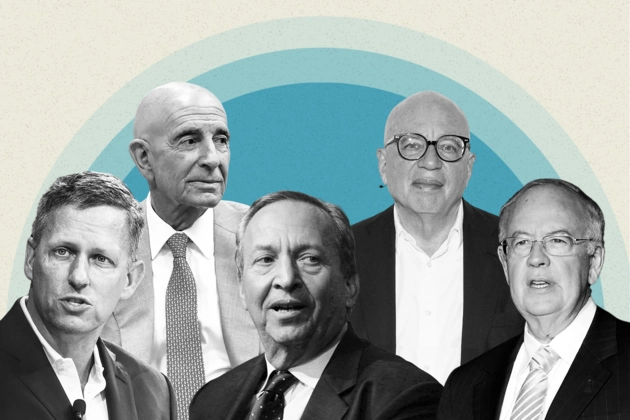
The Foundation of Power
The Epstein Files Exposed: Who Controls Behind the Curtain
Jeffrey Epstein's rise from a mathematics teacher at Manhattan's Dalton School to a financier managing wealth for billionaires remains shrouded in mystery. Unlike typical Wall Street figures, Epstein left almost no paper trail of his financial acumen. Former colleagues and associates have struggled to identify specific investment strategies or remarkable financial insights that would justify his accumulation of wealth and access.
What Epstein undeniably possessed was an extraordinary ability to cultivate relationships with powerful individuals across multiple domains: politics, academia, science, entertainment, and royalty. His private island in the U.S. Virgin Islands, his Manhattan mansion, his New Mexico ranch, and his Paris apartment served as venues where the wealthy and influential gathered, often under circumstances that now appear designed to compromise as much as to connect.
The 2019 indictment and subsequent civil litigation have revealed that Epstein's operations were not the work of a lone predator but involved a coordinated network. Flight logs, witness testimonies, and financial records document a system that recruited, transported, and exploited victims with disturbing efficiency. This raises the central question: who knew, who benefited, and who looked away?
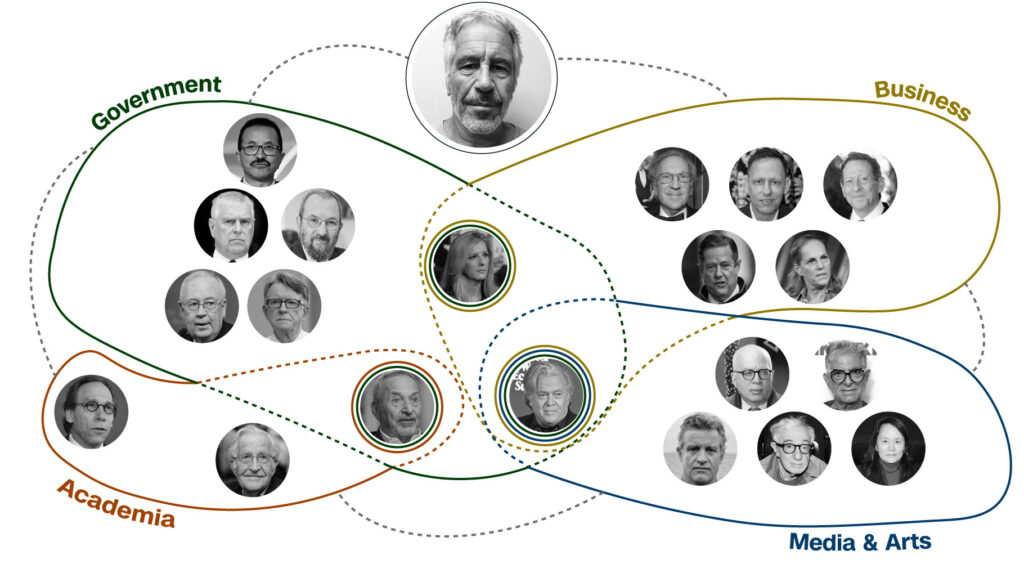
Mapping the Network: A Table of Influence
| Sector | Key Figures Mentioned | Nature of Contact (Per Files) |
| Politics | Bill Clinton, Donald Trump, Narendra Modi | Travel logs, social gatherings, advisory ruminations. |
| Tech | Elon Musk, Bill Gates, Sergey Brin | Investment discussions, party invitations, philanthropic ties. |
| Finance | Howard Lutnick, Leon Black, Leslie Wexner | Multi-million dollar management, island visits. |
| Royalty | Andrew Mountbatten-Windsor | Hundreds of email references, controversial photos. |
The Political Connections
The Epstein Files Exposed: Who Controls Behind the Curtain
Epstein cultivated relationships across the political spectrum with calculated precision. His connections to former President Bill Clinton are well-documented, with flight logs showing Clinton traveled on Epstein's private aircraft multiple times in the early 2000s, though Clinton has denied knowledge of Epstein's crimes and stated he took only four trips (flight logs suggest more).
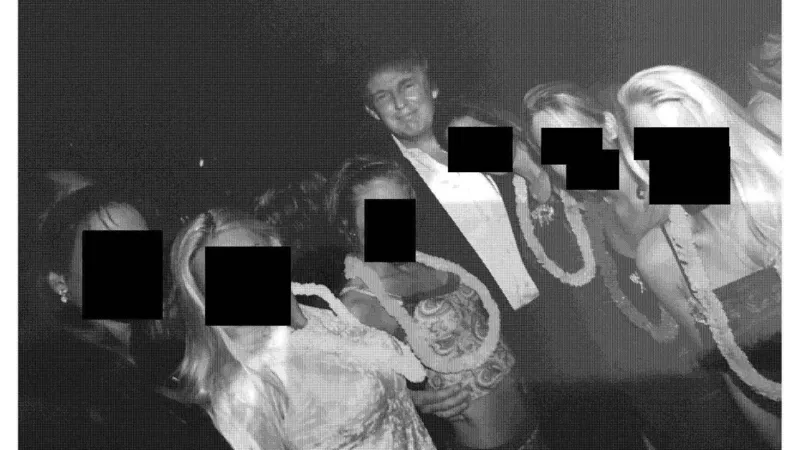
Equally significant were Epstein's connections to Donald Trump. Photographs and video footage from the 1990s and early 2000s show the two socializing at Mar-a-Lago and other venues. Trump later stated he had a falling out with Epstein and banned him from Mar-a-Lago, though the exact timeline and circumstances remain disputed. A 2002 quote from Trump described Epstein as a "terrific guy" who enjoyed women "on the younger side," a statement that has been scrutinized in retrospect.
Beyond these two prominent figures, Epstein's political network extended to members of Congress, governors, foreign leaders, and policy makers. The crucial question is not merely who associated with Epstein socially—many did so before his criminal activities became public knowledge—but who maintained relationships after his 2008 conviction for soliciting prostitution from a minor, and who may have benefited from or contributed to the lenient treatment he received.
The 2008 Plea Deal: Justice Denied
The Epstein Files Exposed: Who Controls Behind the Curtain
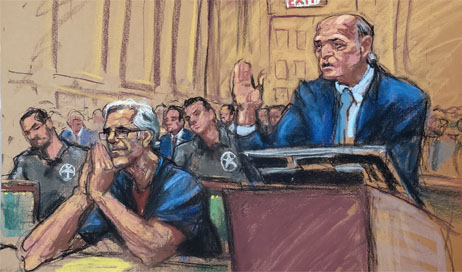
Perhaps the most damning evidence of institutional failure lies in the 2008 non-prosecution agreement brokered by then-U.S. Attorney for the Southern District of Florida, Alexander Acosta. Despite a federal investigation identifying dozens of victims—some as young as 14—Epstein was allowed to plead guilty to state charges of soliciting prostitution from a minor.
The deal, negotiated in secret without informing victims as required by the Crime Victims' Rights Act, allowed Epstein to serve just 13 months in a private wing of the Palm Beach County jail. He was permitted work release six days a week, during which he spent up to 12 hours a day at his office with minimal supervision. This arrangement was so extraordinary that it prompted a federal judge to rule in 2019 that prosecutors had acted illegally by concealing the agreement from victims.
Acosta later stated that he had been told to "back off" Epstein because he "belonged to intelligence," though he never clarified what this meant or provided evidence to support the claim. After Epstein's 2019 arrest, Acosta resigned as U.S. Secretary of Labor amid renewed scrutiny of his role in the 2008 deal.
The question of why Epstein received such preferential treatment has never been satisfactorily answered. Was it due to his wealth and legal team? His connections to powerful individuals? The possibility of intelligence connections? Or a combination of all these factors? The lack of transparency surrounding this decision represents a fundamental failure of the justice system.
Financial Networks and Unexplained Wealth
The Epstein Files Exposed: Who Controls Behind the Curtain
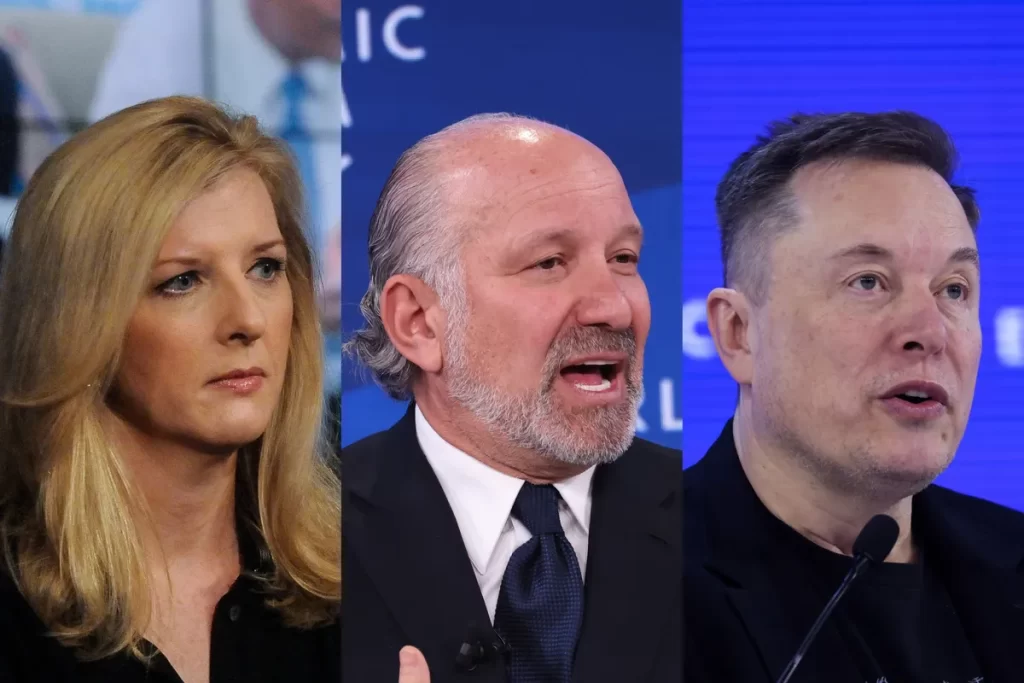
Epstein's financial operations present another layer of mystery. He claimed to manage money only for billionaires, yet his client list was never made fully public. His primary known financial relationship was with Leslie Wexner, founder of L Brands (Victoria's Secret, Bath & Body Works), who gave Epstein power of attorney over his finances—an extraordinary level of trust for someone with no established track record in high-level wealth management.
Documents revealed that Epstein controlled significant portions of Wexner's fortune, including the transfer of Epstein's Manhattan mansion, which Wexner originally purchased. Wexner later stated he severed ties with Epstein in 2007 upon learning of his criminal activities, though questions remain about the nature and extent of their financial relationship during their years of association.
Epstein's offshore accounts, shell companies, and complex financial structures suggest operations designed for opacity. Banking records from Deutsche Bank, which maintained a relationship with Epstein until 2018—a decade after his conviction—showed numerous transactions flagged as potentially suspicious but not adequately investigated.
The Southern Trust Company, Epstein's Virgin Islands-based entity, managed much of his wealth through structures that made tracking the source and destination of funds extremely difficult. This financial architecture raises questions about whether Epstein's wealth management was the actual source of his fortune or whether other activities—potentially including blackmail, intelligence work, or other illicit operations—contributed to his wealth.
The Mechanics of Secrecy: Why Now?
The question remains: If this was known, why did it take until 2026 for 3 million pages to drop?
The files highlight a systemic Institutional Failure. Secrecy was maintained through:
Philanthropic Laundering: Donations to MIT and Harvard bought silence from the intellectual elite.
Legal Shielding: High-priced attorneys (like Alan Dershowitz) and controversial non-prosecution agreements (like the 2008 Acosta deal) kept the federal lid on the case for over a decade.
Victim Suppression: The "files" contain heartbreaking evidence of how survivors were silenced through a combination of NDAs and intimidation.
The Intelligence Question
The Epstein Files Exposed: Who Controls Behind the Curtain
One of the most persistent and controversial questions surrounding Epstein concerns possible intelligence connections. Multiple sources have suggested Epstein had ties to intelligence services, though concrete evidence remains elusive and much of this speculation exists in the realm of unconfirmed reports.
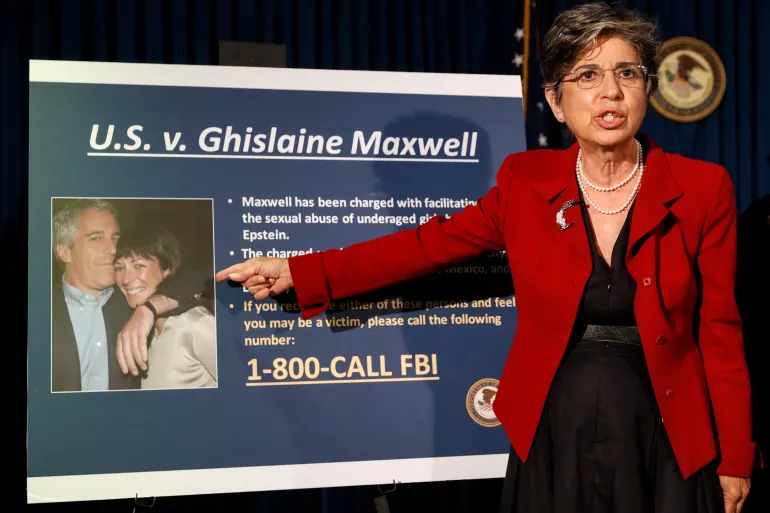
Epstein's former girlfriend and alleged co-conspirator, Ghislaine Maxwell, is the daughter of Robert Maxwell, a British media proprietor who was posthumously identified by investigative journalists as having had extensive connections to Israeli intelligence services. This familial connection has fueled speculation about whether Ghislaine Maxwell or Epstein himself engaged in intelligence-related activitie.
The nature of Epstein's operations—cultivating relationships with powerful individuals in potentially compromising situations, often documented through photographs and video—resembles classic intelligence tradecraft designed to develop leverage over influential targets. However, no government agency has officially confirmed any operational relationship with Epstein.
Former U.S. Attorney Acosta's cryptic comments about being told Epstein "belonged to intelligence" have never been clarified or substantiated. If true, this would represent an extraordinary subversion of justice in service of intelligence operations. If false, it raises questions about why a former U.S. Attorney would make such a claim.
The truth likely lies somewhere in the documented facts: Epstein cultivated powerful people, created situations that could be compromising, and somehow maintained protection from full prosecution despite overwhelming evidence of serial predatory behavior. Whether this protection came from informal influence, formal intelligence connections, or simply the corrupting power of wealth remains an open question.

The Institutional Failures
The Epstein Files Exposed: Who Controls Behind the Curtain
Beyond individual actors, the Epstein case reveals systemic institutional failures across multiple domains
:
Law Enforcement: Despite detailed investigations by Palm Beach police documenting numerous victims, federal and state prosecutors allowed Epstein to evade serious consequences in 2008. The FBI was aware of allegations against Epstein as early as 1996 but failed to develop a prosecutable case for over a decade.
Banking and Financial Regulation: Multiple financial institutions maintained relationships with Epstein despite red flags. Deutsche Bank continued banking for Epstein until 2018, and JPMorgan Chase maintained accounts until 2013, five years after his conviction. Internal documents from both banks show employees raised concerns that were not adequately addressed.
Academic Institutions: Despite lacking undergraduate or graduate degrees, Epstein donated millions to Harvard, MIT, and other prestigious universities. He cultivated relationships with prominent scientists and academics, serving on boards and advisory councils. Several institutions have since conducted reviews of their relationships with Epstein, acknowledging failures in due diligence and ethical oversight.
Media: For years, rumors about Epstein circulated in media circles, yet few publications investigated thoroughly. When journalist Vicky Ward prepared a 2003 Vanity Fair profile of Epstein that included allegations from victims, those accounts were removed before publication, reportedly due to pressure from Epstein and his legal team.
The Maxwell Trial and Ongoing Revelations
The Epstein Files Exposed: Who Controls Behind the Curtain
Ghislaine Maxwell's 2021 conviction on charges including sex trafficking of minors provided additional documentation of how Epstein's operation functioned. Trial evidence showed Maxwell recruited and groomed victims, facilitated their abuse, and participated in the enterprise that enabled Epstein's crimes for years.
Maxwell's conviction was essential for accountability, yet it also highlighted how many questions remain unanswered. The client list of individuals who may have participated in or witnessed illegal activities has not been fully disclosed. While some names have emerged through civil litigation and unsealed documents, many remain protected by privacy laws, sealed court records, or simply lack of evidence sufficient for prosecution.

What Controls Behind the Curtain?
The Epstein Files Exposed
The evidence suggests that what controlled "behind the curtain" was not a single shadowy organization but rather a confluence of enabling factors:
Wealth and Legal Resources: Epstein's money bought extraordinary legal representation that exploited every advantage in the criminal justice system, which demonstrably treats wealthy defendants differently than others.
Social Capital and Networking: Epstein's ability to connect powerful people created mutual dependencies and incentives for individuals to protect their own reputations by not exposing Epstein's activities.
Institutional Deference: Prosecutors, law enforcement, and regulatory bodies showed deference to Epstein's connections and resources in ways they would never afford ordinary defendants.
Compartmentalization of Knowledge: Many people in Epstein's orbit may have known partial information—about his relationships with young women, his lavish lifestyle, his powerful connections—without knowing the full criminal reality or choosing not to look too closely.
Systemic Misogyny: The treatment of Epstein's victims as "prostitutes" rather than trafficked minors reflected broader societal biases that minimized the severity of crimes against young women and girls.
The Unanswered Questions
The Epstein Files Exposed
Despite investigations, prosecutions, and extensive media coverage, crucial questions remain:
Who else participated in or facilitated Epstein's crimes? While Maxwell was convicted, testimony and evidence suggest others were involved in recruitment and facilitation.
What was the full extent of Epstein's financial operations, and where did his wealth truly come from? The opacity of his finances suggests possibilities beyond what has been publicly documented.
Did Epstein have formal or informal relationships with intelligence services, and if so, did these relationships affect his treatment by law enforcement?
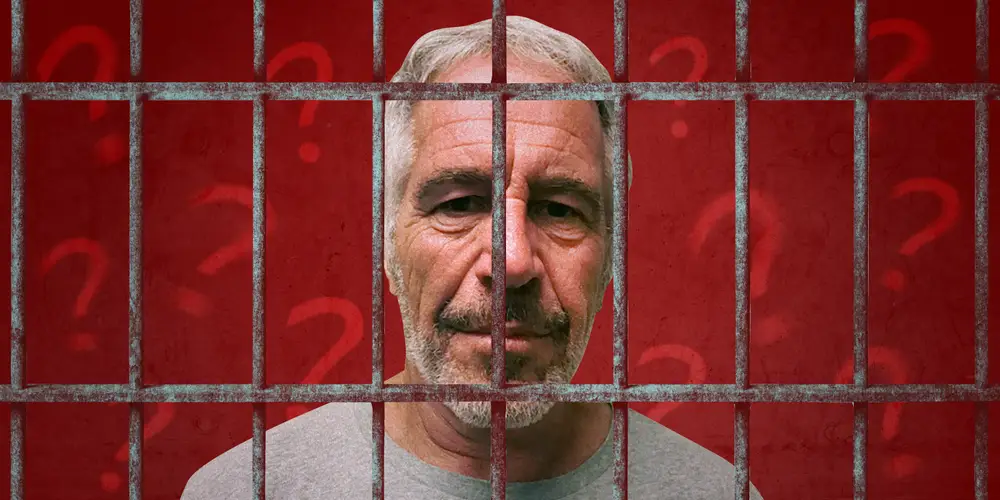
What happened in the hours before Epstein's death in federal custody? While officially ruled a suicide, the circumstances—including failure of video surveillance and procedural violations—have fueled ongoing speculation.
How many victims were there, and have all been identified and offered support and justice?
Moving Forward: Systemic Reform
The Epstein Files Exposed
The Epstein case should serve as a catalyst for reform across multiple systems:
Criminal Justice Reform: Equal treatment regardless of wealth or connections, mandatory transparency in plea agreements, stronger protections for victims' rights, and accountability for prosecutors who subvert justice.
Financial Regulation: Enhanced due diligence requirements for high-net-worth clients, mandatory reporting of suspicious activities regardless of client status, and real consequences for institutions that facilitate illegal activities.
Academic and Institutional Integrity: Rigorous vetting of donors and associates, transparency about conflicts of interest, and willingness to return tainted donations.
Media Responsibility: Courageous investigative journalism that pursues credible allegations regardless of the power of those implicated.
The Epstein Files Exposed: Who Controls the Information Behind the Scenes?
The Epstein Files Exposed
The release of millions of pages from the Jeffrey Epstein investigation was billed as a moment of ultimate transparency—a chance to finally answer the public's urgent questions about the disgraced financier's web of powerful connections. Instead, the chaotic and incomplete disclosure has revealed something perhaps more significant: the complex, often hidden machinery that controls sensitive information in a democracy. The real story of the "Epstein files" is not just about the names within them, but about the institutional gatekeepers, political pressures, and procedural failures that determine what the public sees and what remains shrouded in black ink.
This struggle illuminates a fundamental tension at the heart of modern governance: the public's right to know versus the government's need to protect—privacy, ongoing investigations, and national security. For professionals in leadership, organizational development, and ethics, the Epstein files saga offers a stark case study in how power manages information, the consequences of institutional failure, and the severe cost of eroded public trust.
The Allure of the "List" and the Reality of the Files
The Epstein Files Exposed
Public fascination with the Epstein case has long centered on the myth of a singular "client list"—a ledger naming the rich and powerful who participated in Epstein's crimes. This idea fueled countless conspiracy theories and political promises. In July 2025, the Department of Justice attempted to dispel the myth, releasing a memo concluding no such client list existed and finding no credible evidence Epstein used information to blackmail prominent individuals.
The reality is far more complex. The "files" are not a single dossier but a colossal, disjointed collection of over six million pages identified as potentially responsive to the law. They encompass FBI investigative reports, grand jury transcripts, court records, flight logs, seized personal correspondence, photographs, and videos. The January 2026 release alone contained 3 million pages, 180,000 images, and 2,000 videos. The material is a digital labyrinth with no index or logical order, making coherent analysis a monumental challenge. As one NPR reporter noted, the haphazard release has made it "virtually impossible to tell a full story about anything".
The Gatekeepers: Who Decides What You See?
The Epstein Files Exposed
When the government releases such troves, it doesn't simply open a vault. A meticulous, legally mandated filtering process occurs, managed by an army of civil servants and lawyers. This process is governed by a framework of laws designed to balance competing values.
Freedom of Information Laws: Legislation like the Freedom of Information Act (FOIA) establishes a presumption in favor of public disclosure for executive branch agencies like the FBI and DOJ.
Privacy Protections: The Privacy Act of 1974 restricts the release of personal information that could damage reputations, explicitly protecting innocent third parties, witnesses, and victims.
Judicial Authority: Crucially, court and grand jury records fall outside FOIA. Their release is solely at the discretion of federal judges, placing them beyond the reach of Congress or the President.
Within this framework, officials wield significant discretionary redaction authority. They can black out information for reasons of national security, to protect financial data, or to safeguard law enforcement techniques. The most significant category in the Epstein case is the protection of victims and witnesses. The Epstein Files Transparency Act, signed into law in November 2025, explicitly mandates redactions to protect victims' identities while prohibiting redactions made solely to avoid embarrassing public figures.
The Redaction Balancing Act
The Epstein Files Exposed
| Redaction Justification | Purpose | Challenge in the Epstein Case |
|---|---|---|
| Privacy Act Protections | Shield victims, witnesses, & innocent third parties from exposure & harassment. | Distinguishing between perpetrators, witnesses, and irrelevant contacts in a vast social network. |
| Law Enforcement Techniques | Protect methods that could compromise future investigations. | Epstein's core network is dead or convicted; what ongoing investigations justify secrecy? |
| National Security | Prevent damage to national defense or foreign relations. | Epstein interacted with intelligence figures, scientists, and foreign officials; lines are blurred. |
| Judicial Order | Protect grand jury secrecy & ensure fair trial rights. | Creates an absolute barrier to certain information, fueling speculation. |
| Avoiding "Unwarranted Invasion of Privacy" | A catch-all ethical & legal standard. | Subject to interpretation by officials under political pressure. |
Political Pressure and the "Perimeter Defense"
The Epstein Files Exposed
The process is not conducted in a political vacuum. The Trump administration's handling of the files reveals how political interests can shape transparency. Despite campaign promises to release the files, President Trump resisted congressional action until a vote forced his hand. Upon signing the Transparency Act, he did so without reporters present.
Internal tensions were evident. Attorney General Pam Bondi, a Trump ally, initially claimed a "client list" was on her desk, but later oversight revealed the DOJ had advised the White House in May 2025 that Trump's name appeared in the files alongside "unverified hearsay" and recommended against disclosure. The Deputy Attorney General who announced the final release, Todd Blanche, was previously Trump's personal criminal defense attorney. He insisted the White House exerted no oversight, a claim met with deep skepticism given the context.
This pattern points to a political strategy of perimeter defense: release enough material to claim compliance with the law, but do so in a way that is so chaotic, incomplete, and poorly executed that it obscures more than it clarifies and deflects blame onto bureaucratic incompetence.
A Failure of Execution: Incompetence as a Control Mechanism?
The Epstein Files Exposed
The January 2026 release was a catastrophic failure in execution that calls into question whether the institutional incompetence was accidental or functional. Despite months to prepare, the DOJ published:
Unredacted nude photographs of young women, with faces visible, taken on Epstein's island and in bedrooms.
Names, driver's license photos, email addresses, and private banking details of alleged victims.
Documents where redactions were easily overridden with a double-click, or where names were blacked out in one version but left exposed in another.
Victims' lawyers described their clients' lives being "turned upside down," with one woman receiving death threats after her banking information was exposed. Annie Farmer, who testified against Epstein, stated, "There's just no explanation for how it could have been done so poorly". The DOJ blamed "technical or human error" and scrambled to pull down thousands of documents.
This profound failure served to shift the narrative. Headlines moved from "What's in the files?" to "Government botches release, re-victimizes survivors." The conversation about accountability for powerful associates was diluted by a necessary outrage over the government's mistreatment of victims. In this light, incompetence functions as a potent, if cynical, control mechanism.
The Visible Network and the Enduring Shadows
The Epstein Files Exposed
Despite the chaos, the released files undeniably sketch the contours of Epstein's world. They show a man who remained deeply embedded in elite circles after his 2008 conviction, communicating with:
Tech and Business Leaders: Elon Musk enthusiastically emailing about visiting Epstein's island for the "wildest party". Richard Branson joking about Epstein bringing his "harem". Bill Gates being the subject of bizarre, allegedly fabricated emails.
Political Figures: Former Treasury Secretary Larry Summers exchanging emails critiquing Trump. Slovak diplomat Miroslav Lajčák resigning after texts about "games" with girls were revealed.
Media and Entertainment Personalities: Director Brett Ratner appearing in photos. "Anti-aging influencer" Peter Attia exchanging crass emails.
Crucially, appearance in the files does not imply wrongdoing. Many interactions were seemingly benign. The true power of the files lies in mapping the social capital Epstein cultivated and the access it granted him.
Yet, millions of pages remain unreleased. What do they contain? The DOJ cites the presence of Child Sexual Abuse Material (CSAM) and information that could identify victims. While these are valid reasons, without an independent audit, the public has no way to verify if this is the full story. Critics like Democratic Rep. Ro Khanna argue that failing to release all responsive files "shields the powerful individuals who were involved and hurts the public's trust in our institutions". The enduring shadows nurture conspiracy and confirm for many that the system is engineered to protect its own.
Lessons for Talent Development and Ethical Leadership
The Epstein Files Exposed
For those focused on developing talent and fostering ethical organizations, the Epstein files controversy is a rich, dark lesson.
Transparency is a Process, Not an Event: True accountability requires orderly, complete, and context-rich disclosure. A dump of millions of disordered pages is an act of obfuscation, not transparency. Organizations committed to integrity must build systematic, trustworthy processes for disclosure when crises hit.
Institutional Competence is an Ethical Imperative: The DOJ's failure to perform the basic technical task of redaction violated the trust and safety of victims. In any organization, operational competence—the ability to execute core duties reliably—is foundational to ethical conduct. Sloppiness can be as damaging as malice.
Power Networks Matter: Epstein's case is an extreme study in toxic networking. He traded on access, prestige, and perceived utility to disarm the ethical guardrails of individuals and institutions. Professionals must be trained to recognize when a relationship's social or professional value is being used to compromise judgment and normalize aberrant behavior.
The "Myth of the List" vs. Systemic Analysis: The public craved a simple villain roster, but the truth is about systemic enablement—a network of pilots, assistants, lawyers, and associates; plea deals brokered by officials; and social shrugs from elite peers. Fighting corruption requires examining and strengthening systems, not just hunting for villains.
Who Really Controls the Files?
The Epstein Files Exposed
So, who controls the Epstein files? The answer is not a singular villain in a shadowy room. Control is exercised by:
The Legal Framework: The laws that mandate redactions for privacy and forbid them for embarrassment.
The Bureaucracy: The civil servants and lawyers who apply those laws, whose work can be meticulous or catastrophically careless.
The Judiciary: Judges who hold grand jury records inviolable, creating absolute zones of secrecy.
The Political Apparatus: Officials who can slow-walk, shape narratives, and release materials in ways that manage political fallout.
The Failure Itself: Chaos that redirects outrage and exhausts the public's capacity for scrutiny.
The final, tragic controllers are the shadows themselves—the gaps in the record, the black redaction bars, and the millions of unseen pages. They perpetuate a cycle of suspicion and disillusionment. Until transparency is pursued with genuine competence, good faith, and a unwavering commitment to justice for the powerless over protection for the powerful, the public will rightly believe that the most important files—the ones that reveal how power truly operates—remain firmly under lock and key.