
CategorieseLearning LMS

AI in Personalized Learning: Trends & Benefits for 2025

AI in Personalized Learning

In the next three years, over 47% of learning management systems are expected to be powered by artificial intelligence (AI), potentially transforming the way students learn. AI has the capability to deliver personalized educational experiences, tailoring learning to individual needs, strengths, and challenges.

Personalized learning is an educational approach that focuses on the unique learning processes of each student, addressing their specific needs, abilities, and concerns. This method goes beyond traditional education, offering customized learning environments that can enhance student outcomes. Many believe that such tailored approaches can lead to better learning experiences and improved academic performance.

This blog explores the potential of AI in personalized learning, its real-world applications, and the challenges that lie ahead. Keep reading to learn more.

Key Trends and Projections for AI in Personalized Learning (2025)

The global AI in education market is projected to grow at a compound annual growth rate (CAGR) of 36.0% from 2022 to 2023, underscoring its transformative potential. Key areas where AI drives personalized education include:

1. Increased Adoption of AI in Education

By 2025, it is projected that over 60% of learning management systems (LMS) will integrate AI capabilities. This growth is driven by the demand for more efficient, scalable, and personalized learning solutions. Schools, universities, and corporate training programs are increasingly adopting AI-powered tools to enhance learning outcomes.

2. Hyper-Personalization Through Advanced AI

AI will enable hyper-personalized learning experiences by leveraging deeper data analytics, natural language processing (NLP), and machine learning (ML). Systems will not only adapt to students’ academic performance but also consider their emotional states, learning preferences, and even cultural backgrounds to deliver truly individualized content.

3. Rise of AI-Powered Virtual Tutors

Virtual tutors powered by AI will become more sophisticated, offering real-time, one-on-one support to students. These systems will use conversational AI and sentiment analysis to provide empathetic and context-aware guidance, making learning more engaging and effective.

4. Predictive Analytics for Early Intervention

Predictive analytics will play a crucial role in identifying at-risk students before they fall behind. By analyzing data such as attendance, engagement, and performance, AI systems will provide actionable insights to educators, enabling early interventions and reducing dropout rates.

5. Gamification and Immersive Learning

AI will drive the integration of gamification and immersive technologies like augmented reality (AR) and virtual reality (VR) into personalized learning. These tools will make learning more interactive and enjoyable, particularly for younger students.

6. Focus on Social and Emotional Learning (SEL)

AI will increasingly address social and emotional learning by analyzing behavioral and emotional cues. This will help educators create supportive learning environments that foster not only academic success but also mental well-being.

7. Ethical AI and Data Privacy

As AI becomes more pervasive in education, there will be a stronger focus on ethical AI practices and data privacy. Governments and organizations will likely implement stricter regulations to protect student data and ensure transparency in AI algorithms.

8. Bridging the Digital Divide

Efforts to close the digital divide will intensify, with initiatives to provide affordable devices and internet access to underserved communities. This will ensure that AI-powered personalized learning is accessible to all students, regardless of their socioeconomic background.

9. AI in Lifelong Learning & Workforce Development

Beyond traditional education, AI will play a significant role in lifelong learning and workforce development. Personalized learning platforms will help professionals upskill and reskill in response to rapidly changing job markets.

Challenges to Address by 2025

1. Algorithmic Bias and Fairness

Ensuring that AI systems are free from bias and provide equitable learning opportunities for all students will remain a critical challenge. Developers must prioritize fairness and inclusivity in AI design.

2. Teacher Training and Adoption
Educators will need training to effectively integrate AI tools into their teaching practices. Resistance to change and lack of technical skills could slow adoption rates.

3. Cost and Infrastructure
Implementing AI-powered systems requires significant investment in infrastructure and technology. Schools and institutions with limited budgets may struggle to keep up.

4. Over-Reliance on Technology
There is a risk of over-relying on AI, potentially diminishing the role of human educators. Striking the right balance between technology and human interaction will be essential.

Real-World Applications in 2025

1. AI-Driven Curriculum Design: Schools and universities will use AI to design dynamic curricula that adapt to students’ evolving needs and interests.

2. Personalized Career Pathways: AI will help students identify career paths aligned with their skills and passions, providing tailored recommendations for courses and internships.

3. Global Collaboration: AI-powered platforms will facilitate cross-cultural collaboration, connecting students from different parts of the world for joint projects and learning experiences.

We Provide

Conclusion

By 2025, AI is expected to play a transformative role in personalized learning, offering unprecedented opportunities to tailor education to individual needs. However, realizing this potential will require addressing challenges related to ethics, accessibility, and implementation. As AI continues to evolve, its impact on education will likely extend beyond 2025, shaping the future of learning for generations to come.

For organizations looking to harness the power of AI and personalized learning, platforms like Talent Development’s LMS provide a robust solution. Talent Development’s LMS offers a flexible platform equipped with user-friendly features for course creation, assessments, and reporting. Suitable for organizations of all sizes, it provides scalability and adaptability to meet evolving needs. Many companies utilizing this LMS have reported increased employee satisfaction and enhanced training efficiency. Additionally, Talent Development delivers a range of solutions, including Talent Development Software, LMS for colleges, LMS for schools, LMS for corporations, and LMS for businesses, ensuring that organizations have the necessary tools to foster a culture of learning and development.


CategorieseLearning LMS

Transform Your University with the Talent Development LMS Platform

BUILD YOUR DREAM UNIVERSITY WITH OUR
WORLD-CLASS UNIVERSITY LMS SOFTWARE


University LMS

In today’s digital age, universities are increasingly turning to technology to enhance learning experiences and expand their reach. Talent Development, a premier Learning Management System (LMS) platform, is designed specifically to help higher education institutions seamlessly transition from traditional on-campus models to robust online learning programs. With tools to deliver online courses, live classes, and online exams, this platform fosters strong instructor-student relationships while creating flexible, engaging learning environments.

Build Your Dream University with Talent Development LMS

The Talent Development LMS offers universities, colleges, and schools the ability to extend their educational reach beyond campus boundaries. Whether aiming to accommodate off-site students or attract learners from around the world, this advanced platform empowers institutions to provide flexible, online degree programs tailored to individual needs.

Key benefits include:

  • Personalized learning experiences for students.
  • Enhanced engagement and collaboration.
  • Comprehensive tracking and analytics.
  • Opportunities for customization.
  • Parental involvement and learning flexibility.

With features like blended learning workflows, gamification, and live video/audio conferencing, Talent Development LMS transforms higher education. Universities can create dynamic learning environments where students gain skills for employability while achieving high success rates.

Overcoming Challenges in Online Education

Transitioning to an online university comes with hurdles. Common challenges include:

  • Selecting the right LMS for delivering degree certification.
  • Preparing and curating course curriculums.
  • Recording and securing video lectures.
  • Publishing content efficiently.
  • Marketing courses to a wider audience.

The Talent Development LMS is designed to address these pain points, simplifying the transition process and enabling universities to focus on delivering quality education.

Learning LMS Features
Empowering Universities Across Disciplines

Empowering Universities Across Disciplines

The Talent Development LMS adapts to the diverse needs of different educational institutions, including:

1. Arts & Science Universities

These institutions often focus on critical thinking, problem-solving, and skill development. With Talent Development LMS, they can deliver skill-based training, host interactive problem-solving sessions, and establish their online presence effectively.

2. Agricultural Universities

Agricultural universities can leverage Talent Development LMS to provide multimedia course materials, simulation-based learning, and science-focused programs. This ensures students receive quality education in a flexible, online format.

3. Medical Universities

Medical institutions require modern tools to meet technological demands in education. Talent Development LMS helps streamline medical training, enabling universities to offer online courses that include detailed guides, live sessions, and updated educational practices.

4. Law Universities

Legal education often requires comprehensive materials and structured training programs. Talent Development LMS allows law schools to upload resources, create tailored programs, and deliver effective online legal education.


Features of Talent Development LMS

The platform offers a suite of features tailored to the unique needs of higher education institutions. These features are categorized as follows:

1. Administrative Features
  • Easy course creation and management.
  • Tools for organizing exams, managing students, and overseeing instructors.
2. Marketing Features
  • Built-in marketing tools to promote and sell course content.
  • Customizable features to enhance course visibility and enrollment.
3. Analytics Features
  • Detailed reports on exams, assignments, and student activity.
  • Insights into course feedback and overall program performance.
4. Learning Features
  • High-quality content delivery tools.
  • Support for interactive and engaging learning experiences.
5. Security Features
  • Advanced encryption standards to protect learning materials.
  • Ensures 100% confidentiality of all content.
6. Other Key Features
  • White-labeling: Institutions can customize the platform with their branding.
  • Offline Access: Students can download materials for offline use.
  • Customizable Website Builder: Create unique, branded online spaces for learning.
Features of Talent Development LMS
How Talent Development LMS Transforms Universities

How Talent Development LMS Transforms Universities

By leveraging the Talent Development LMS, universities can deliver content in diverse formats such as videos, animated lessons, documents, exams, and interactive exercises. This versatility ensures a rich, engaging learning experience for students across disciplines.

Key Highlights:

  • Interactive Learning: Supports videos, simulations, and assessments for hands-on training.
  • Blended Learning: Combines traditional teaching methods with innovative online tools.
  • Gamification Elements: Enhances student motivation and engagement.

Through Talent Development, universities can establish themselves as leaders in online education, offering training programs and certifications that resonate with modern learners.

Tailored Solutions for Specialized Institutions

IIT JEE and NEET Coaching

Talent Development LMS supports institutions offering preparatory programs for competitive exams. Universities can provide structured content, regular assessments, and detailed guidance, all within a secure online framework.

Professional Training and Coaching

Beyond academic disciplines, Talent Development LMS serves institutions offering professional certifications. Whether it’s skill-based training or corporate learning, the platform accommodates a wide range of programs.

IIT JEE and NEET Coaching
Methodology - Design of the Survey

Elevate Education with Talent Development LMS

Talent Development LMS empowers universities to seamlessly integrate traditional education models with cutting-edge technology. Its adaptability, combined with advanced features like AI-driven insights and customizable content delivery, makes it a trusted partner for institutions aiming to excel in online education.

By choosing Talent Development LMS, universities can overcome the challenges of transitioning to online education while providing students with enriching, flexible learning experiences. The future of higher education is here—transform your university today with the Talent Development LMS platform.

Talent Development LMS is a comprehensive Learning Management System designed for universities, colleges, and schools. It helps institutions deliver online courses, live classes, exams, and certifications, catering to both on-campus and off-site students.

The platform integrates traditional classroom methods with online tools like live video conferencing, interactive exercises, and gamification elements. This ensures a seamless learning experience for students while fostering engagement.

Yes! The platform supports white-labeling, allowing universities to personalize the interface with their branding, colors, and logos. It also includes a customizable website builder to create a unique online learning space.


Content is protected by advanced encryption standards, ensuring 100% confidentiality. This keeps all course materials, student data, and other sensitive information secure.


Absolutely! The LMS offers robust analytics features that generate reports on student performance, course progress, feedback, and activity. These insights help educators make data-driven decisions.


The platform includes tools for live video/audio conferencing, enabling real-time interaction between instructors and students. It also supports recording sessions for later review.


Yes, the platform supports secure online exams with various question formats. Institutions can create, manage, and grade exams seamlessly while ensuring integrity through advanced security features.


Yes, Talent Development LMS is mobile-friendly, ensuring students can access courses, participate in discussions, and complete assignments on the go.


The platform includes marketing features to promote and sell courses. Universities can attract a global audience by leveraging built-in tools for advertisements, social media campaigns, and email marketing.


Getting started is simple! Reach out to our team to discuss your needs, customize the platform to suit your institution, and receive training on implementation. Talent Development LMS offers full support to ensure a smooth transition.

How to Start Offering Online Degree Certifications at Your University

Transitioning to an online degree certification model can seem overwhelming, but with the right tools and strategy, it becomes an achievable goal. Talent Development LMS is the ideal technology partner to help you establish a thriving online university. Follow these six steps to get started:

Step 1: Create Learning Materials

Develop course content in various formats, including:

  • Videos: Record lectures, demonstrations, and tutorials.
  • Documents: Prepare detailed notes, reading materials, and assignments.
  • Exams: Create quizzes and tests to assess student learning effectively.

This step ensures your content is ready for online delivery.

 
How to Start Offering Online Degree Certifications at Your University
Step 2: Find the Best University LMS Software

Choose a reliable LMS platform that meets your needs. With its robust AI-powered features, Talent Development LMS is a top choice. Evaluate platforms for scalability, customization options, and security before making a decision.

Step 3: Upload Courses to the LMS

Once you’ve selected the LMS, upload your prepared materials. The platform should support diverse content types like videos, documents, and interactive quizzes to create a comprehensive learning experience.

Step 4: Market Your Courses

Leverage built-in marketing tools to promote your courses. Use strategies such as:

  • Social Media Campaigns: Reach potential students via platforms like Facebook, LinkedIn, and Instagram.
  • Email Marketing: Share newsletters and announcements to keep your audience informed.
  • SEO and Ads: Optimize your course content to attract learners searching for online programs.

This step is essential for growing your student base.

Step 5: Deliver Online Certifications

Upon course completion, provide students with digitally authenticated certifications directly through the LMS. This feature not only saves time but also ensures credibility and professionalism.

Which LMS Is Best for Higher Education?

Which LMS Is Best for Higher Education?

Selecting the right LMS is crucial for the success of your online university. Here are some top options:

1. Talent Development LMS

Talent Development is a leading AI-powered LMS tailored for higher education. It enables universities to:

  • Deliver personalized learning experiences.
  • Automate administrative tasks through a user-friendly dashboard.
  • Provide online degree certifications seamlessly.
    Its robust features and flexibility make it an ideal choice for universities transitioning to online education.

2. Blackboard

Blackboard is a cloud-based LMS known for its reliability and scalability. It allows universities LMS to upload course materials and make them accessible to students anytime. The platform emphasizes collaboration and continuous feedback.

3. Moodle

Moodle is a popular open-source LMS that focuses on social learning. Its customizable interface allows educators to design an experience that resembles familiar social tools, making learning more engaging.

4. Kadenze

Kadenze specializes in courses related to arts, music, and technology. It is a great choice for creative disciplines and leverages innovative tools to foster artistic learning.

5. EthosCE

EthosCE is designed for healthcare education. It integrates social media channels like LinkedIn, Facebook, and Twitter to enhance collaborative learning. This platform is ideal for healthcare professionals and medical institutions.

Why Choose Talent Development LMS?

While there are many LMS options, Talent Development stands out due to its comprehensive approach to online education. It offers:

  • Advanced AI Features: Automate tasks, manage content efficiently, and personalize learning experiences.
  • All-in-One Solution: From course creation to certification delivery, Talent Development covers every aspect of online education.
  • User-Friendly Interface: Intuitive navigation for educators and students.
  • Global Reach: Tools to market and scale programs beyond traditional boundaries.

Starting your online degree certification program is a significant step towards the future of education. With Talent Development LMS, your university can confidently embrace this change and provide world-class online learning experiences.

Why Choose Talent Development LMS?
CategoriesAdvanced AI

How AR and VR Are Transforming Education

How AR and VR Are Transforming Education

Research shows that most people prefer watching over reading, which isn’t surprising in today’s fast-paced, tech-driven world. With attention spans shrinking and students often turning to mobile devices for distraction, traditional methods of teaching—like textbooks and blackboards—aren’t always engaging enough. Here is where augmented reality (AR) and virtual reality (VR) can make a difference. These immersive tools add new layers to the learning experience, making education both engaging and memorable.


How AR and VR Work in Education

Augmented Reality (AR):

AR enhances the real world by overlaying digital content like text, sound, and images onto a physical environment. Students can use AR on smartphones, tablets, or laptops, allowing them to explore digital worlds that integrate directly with their physical surroundings. This combination of real and virtual worlds helps students visualize and interact with concepts in ways that make learning more concrete and memorable.

Virtual Reality (VR):

In contrast, VR fully immerses users in a digitally created world. Students put on VR headsets, like Meta’s Oculus Rift, to explore interactive, 3D environments that feel remarkably lifelike. VR allows students to engage with content in a way that’s both hands-on and visually rich, turning complex subjects into experiences they can explore and remember.

Assistive Technology: Helping Students Engage and Learn
How Assistive Technology Benefits Students with Different Needs

The Benefits of AR and VR in Education

1. Hands-On Learning

Immersive technology turns learning into an active experience. Instead of just reading about historical sites, for example, students can “visit” them through virtual tours, deepening their understanding and sparking curiosity.

2. Enhanced Collaboration

VR can bring teachers and students together in virtual classrooms, facilitating teamwork even when learning remotely. With AR, students can work together on virtual projects, seeing each other’s contributions and interacting in real time. 

3. Greater Access to Learning Materials
These technologies reduce the need for physical textbooks and resources, potentially lowering costs. AR and VR can serve as affordable and accessible alternatives to traditional materials, opening doors for schools with limited budgets.

4. Gamified, Engaging Learning
AR and VR incorporate elements of play, making learning feel less like a task and more like an adventure. The interactive, game-like nature of AR and VR appeals to students’ natural curiosity, making lessons more engaging and enjoyable.

5. Simplifying Complex Concepts
Topics that may feel abstract or difficult to understand become clearer when students can visualize and manipulate them. This hands-on approach makes it easier to grasp and retain complex ideas.

Challenges in Implementing AR/VR in Education

Despite their benefits, AR and VR face certain challenges in educational settings:

  1. Cost of Development
    Many modern devices can run AR and VR apps, but budget devices often lack this capability. Providing the necessary hardware for large groups of students may be costly for schools.

2. Mobility Limitations
Using AR and VR often requires students to stay in one place, which can feel restrictive. Extended VR sessions may also lead to discomfort, as VR headsets can be cumbersome.

3. Health Considerations
Studies recommend limiting VR time, especially for younger children, as prolonged use may affect eyesight and concentration.

4. Need for Training
AR and VR are relatively new in education, and many educators still lack training on how to use these tools effectively. Investing in training will be essential to maximize the benefits.

Challenges in Implementing AR/VR in Education

Conclusion

As educational technology (Ed-Tech) continues to grow, AR and VR will likely become standard tools for schools around the world. For educators, students, and parents, a unified digital platform that includes AR/VR features can streamline and enrich the educational experience. Talent Development LMS, for example, is already working to integrate AR and VR functions into its existing platforms for students and parents. This technology is not just a trend; it’s paving the way for a new era in education—one where learning is interactive, accessible, and inspiring.

At Talent Development LMS, we offer solutions tailored to meet the unique needs of educational institutions, businesses, and corporations. Our offerings include Talent Development Software, Learning Management Systems (LMS) for Colleges LMS, Schools LMS, Corporate LMS, and businesses, providing organizations with essential tools to foster a culture of learning and growth. As a recognized leader in LMS services in the UAE and a highly regarded provider in Saudi Arabia, Talent Development LMS is dedicated to empowering organizations across various sectors. With the right approach and technology, institutions can create dynamic learning environments, making the LMS a supportive partner in fostering lifelong learning, collaboration, and success.

CategorieseLearning

Top 5 Benefits for Corporate Training

Using a Cloud-Based Learning Management System: Top 5 Benefits for Corporate Training

Why Your Teams Need This Course

In today’s fast-paced corporate world, where training and development are crucial to staying competitive, adopting new technologies is essential. One of the most transformative tools in corporate training is the cloud-based Learning Management System (LMS). By streamlining training processes, offering flexibility, and improving accessibility, cloud-based LMS solutions help organizations enhance the learning experience while supporting overall growth. In this article, we’ll explore the top five benefits of a cloud-based LMS for corporate training and discuss how it can significantly boost organizational success.

What is a Cloud-Based Learning Management System?

A cloud-based Learning Management System is an online platform that enables organizations to manage, deliver, and track learning and development programs without requiring local installations or extensive IT infrastructure. Unlike traditional LMS software that must be installed on individual devices, a cloud-based LMS is accessible from any device with internet access. This flexibility not only simplifies training logistics but also makes learning resources readily available for employees, no matter where they are.

In addition to ease of access, cloud-based LMS platforms often incorporate a wide range of online resources and interactive tools that enhance engagement and support diverse learning styles. These systems can be particularly beneficial in corporate settings where remote work, travel, and diverse schedules are common.

What is a Cloud-Based Learning Management System?

Top 5 Benefits of a Cloud-Based Learning Management System

Optimal Resource Allocation

1. Cost-Effectiveness

One of the most significant advantages of a cloud-based LMS is its cost-efficiency. Traditional LMS solutions require a hefty upfront investment in hardware, software, and ongoing maintenance. On the other hand, a cloud-based LMS follows a subscription model, allowing organizations to pay based on usage or choose a pricing plan that fits their needs. This setup eliminates the need for expensive initial investments, making it easier for companies to allocate resources toward core business areas.

Furthermore, because cloud-based LMS providers handle maintenance, updates, and security, organizations save on IT costs and resources. With a cloud-based solution, there’s no need to hire additional IT staff or invest in system upgrades, as these responsibilities fall under the service provider’s scope. Ultimately, companies benefit from a cost-effective training solution that doesn’t compromise on quality or functionality.

2. Scalability and Flexibility

Cloud-based LMS solutions offer exceptional scalability, making it easy to adjust training programs as organizational needs change. Whether a company is expanding, downsizing, or experiencing temporary workforce fluctuations, a cloud-based LMS allows them to scale their training programs without overhauling the entire system.

For instance, if a company is onboarding new hires, they can quickly increase the number of users on the platform. Likewise, if training needs to be scaled down, adjustments can be made just as easily. In addition, cloud-based systems often allow companies to customize content and features, so training programs can be continually adapted to meet evolving workforce demands.

How Automation Can Improve Quality of Life for Employees
Methodology - Design of the Survey

3. Enhanced Accessibility and Convenience

Today’s workforce is increasingly mobile, with employees often working from different locations or traveling for business. A cloud-based LMS addresses this by offering accessible learning materials anytime, anywhere with internet access. This flexibility enables employees to complete training at their convenience, whether on a desktop, tablet, or smartphone.

This accessibility not only supports employee autonomy but also increases training completion rates. When employees can access training materials as their schedules allow, they’re more likely to stay engaged and committed to completing required courses. By promoting self-paced learning, a cloud-based LMS helps organizations build a skilled, knowledgeable workforce in a way that fits the modern work environment.

4. Streamlined Content Creation and Management

Creating and managing training content can be a time-consuming process, but a cloud-based LMS simplifies these tasks with user-friendly tools that even non-technical staff can use effectively. Many cloud-based LMS platforms offer features such as drag-and-drop content creation, customizable templates, and multimedia integration, making it easy to design engaging, interactive training materials.

Additionally, cloud-based systems allow for real-time content updates, which is especially valuable in fast-paced industries where training materials may need to be refreshed frequently. With built-in analytics and reporting tools, organizations can track learner progress and assess the effectiveness of training programs. These insights help trainers identify areas for improvement and make data-driven decisions to optimize training outcomes.

Cost-Effectiveness
Will the LMS Be Compatible With Other Systems?

5. Improved Collaboration and Communication

Effective training goes beyond content delivery; it also involves fostering collaboration and communication among learners. A cloud-based LMS provides a centralized platform where employees can interact, share knowledge, and work together on projects, enhancing the learning experience.

Features like discussion forums, group assignments, and social learning components facilitate knowledge-sharing and encourage employees to learn from one another. These collaborative elements help create a sense of community, which is particularly valuable for remote or distributed teams. Trainers can also use the platform to provide feedback, post announcements, and share updates, ensuring that everyone stays informed and engaged throughout the training process. This collaborative environment promotes a culture of continuous learning and contributes to a positive organizational culture.

Boost Learning and Employee Growth with AI-Powered LXP

Many cloud-based LMS platforms now incorporate artificial intelligence (AI) to further personalize and enhance the learning experience. For example, AI-powered Learning Experience Platforms (LXPs) can analyze employee data to suggest relevant training materials based on individual learning styles, interests, and job roles. By curating content that aligns with each learner’s needs, AI-powered LXPs help employees engage more deeply with the material, leading to faster skill acquisition and improved performance.

Easily Switch to a Distance Learning Environment

Conclusion

A cloud-based LMS brings significant advantages to corporate training, from cost savings and scalability to improved accessibility and streamlined content management. By investing in a cloud-based LMS, organizations can build training programs that not only meet the demands of the modern workforce but also drive employee development and organizational success. As the business environment continues to evolve, embracing cloud technology in training is a strategic move that positions companies for long-term growth.

Implementing a cloud-based LMS fosters a more adaptable, knowledgeable, and engaged workforce. With the flexibility to learn at their own pace and collaborate with peers, employees are empowered to grow and succeed. For companies aiming to stay ahead in a competitive market, adopting a cloud-based LMS is more than just a technology upgrade—it’s an investment in their people and their future.

In conclusion, using a cloud-based LMS offers numerous advantages that make corporate training more efficient, accessible, and engaging. It’s an essential tool for organizations looking to build a knowledgeable and agile workforce ready to meet the demands of the modern business landscape. We offer solutions like cloud-based LMS Talent Development Software, LMS for colleges, LMS for schools, LMS for corporations, and LMS for businesses, ensuring organizations have the tools they need to create a culture of learning and development. Recognized as the best LMS Company in the UAE and a top-reported LMS services provider in Saudi Arabia, Talent Development LMS is committed to supporting the growth and success of organizations across sectors. With the right strategies, institutions can cultivate a vibrant learning environment, positioning the LMS as a valuable learning companion and fostering a culture of lifelong learning and collaboration.

 

Cloud-Based Learning Management System (LMS) FAQs

A cloud-based LMS is an online platform that enables organizations to deliver, track, and manage training programs without requiring local software installations. It can be accessed from any internet-connected device, making it convenient and user-friendly.

A cloud-based LMS enhances accessibility, scalability, and cost-efficiency. Learners can access materials anywhere, programs can be scaled easily, and maintenance costs are generally lower than those of traditional systems.

Unlike a traditional LMS, which is hosted on local servers and requires significant investment and maintenance, a cloud-based LMS is hosted online. This allows for easier access, updates, and scalability without the need for extensive physical infrastructure.

Yes, a cloud-based LMS is designed to facilitate online courses as well as in-person training sessions. This flexibility allows organizations to implement hybrid learning models that cater to diverse learning needs.

Absolutely. The subscription-based model, scalability, and minimal IT requirements make cloud-based LMS platforms an ideal choice for small businesses seeking effective and affordable training solutions.

Cloud-based LMS platforms typically feature strong security protocols, including data encryption, regular backups, and compliance with industry standards. Organizations should ensure that their chosen LMS provider meets their security requirements.

Most cloud-based LMS platforms offer subscription plans based on the number of users, features, and support level. This allows organizations to select a plan that aligns with their budget and training needs.

Many cloud-based LMSs include features such as forums, quizzes, and multimedia integration that make learning more engaging. These tools foster an interactive environment and encourage active participation from learners.

Organizations may face challenges such as system integration, ensuring user adoption, and managing cultural changes. With proper planning and support, these challenges can be effectively managed for a smooth transition.

CategorieseLearning

Current Issues in Emerging eLearning

Current Issues in Emerging eLearning

Abstract

The digitalization of education has significantly transformed the learning experience, with eLearning becoming a crucial aspect of modern education. This thesis explores the current issues in emerging eLearning, focusing particularly on the quality management of Learning Management Systems (LMS) from a user experience perspective. The research analyzes recent eLearning trends, evaluates LMS quality through user experiences, and offers recommendations for future improvements. Survey-based data collection and analysis were used to provide insights into user expectations and satisfaction levels. The findings highlight the importance of quality management and user-centric design in eLearning platforms.

Current Issues in Emerging eLearning
Quality Management of Learning Management Systems

Introduction

The adoption of eLearning has rapidly accelerated over the past decade, driven by technological advancements and a growing demand for flexible education. Learning Management Systems (LMS) have emerged as a core component in delivering online education, enabling institutions and corporations to manage, deliver, and track learning activities. Despite the proliferation of LMS platforms, quality management remains a significant challenge, particularly concerning user experience (UX). This thesis seeks to investigate the current issues in emerging eLearning, with an emphasis on evaluating LMS quality from the perspective of users. The study will examine existing trends, user satisfaction, and the future direction of LMS development.

Quality Management of Learning Management Systems – A User Experience Perspective

Quality management in LMS ensures platforms meet user needs and provide an optimal learning experience. The primary aspects of LMS quality management include content management, accessibility, usability, and technical reliability. From a user experience perspective, the quality of an LMS can significantly impact learning outcomes, engagement, and user satisfaction.

1. Content Management: The ability of an LMS to support various types of content (e.g., videos, documents, quizzes) and facilitate seamless content delivery is crucial. Effective content management ensures that learners have access to relevant and high-quality educational materials.

2. Accessibility: With the growing emphasis on inclusive education, accessibility is a fundamental quality measure. An LMS must cater to diverse learners, including those with disabilities, by adhering to accessibility standards such as the Web Content Accessibility Guidelines (WCAG).

3. Usability: Usability involves the ease with which users can navigate the LMS and accomplish tasks. A user-friendly LMS enhances learning by reducing frustration and cognitive load.

4. Technical Reliability: An LMS must be technically stable, with minimal downtime, bugs, or errors. Reliability directly affects the user’s trust in the platform and their willingness to engage in online learning.

The quality management of LMS from a user experience perspective requires a comprehensive approach that includes ongoing user feedback, regular updates, and continuous testing to improve the platform’s overall quality.

Quality Management of Learning Management Systems
Current Issues in Emerging eLearning

Current Issues in Emerging eLearning

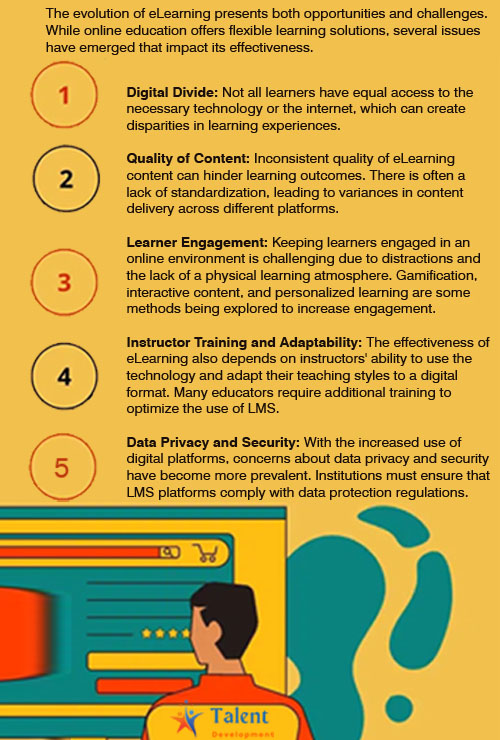
The evolution of eLearning presents both opportunities and challenges. While online education offers flexible learning solutions, several issues have emerged that impact its effectiveness.

1. Digital Divide: Not all learners have equal access to the necessary technology or the internet, which can create disparities in learning experiences.

2. Quality of Content: Inconsistent quality of eLearning content can hinder learning outcomes. There is often a lack of standardization, leading to variances in content delivery across different platforms.

3. Learner Engagement: Keeping learners engaged in an online environment is challenging due to distractions and the lack of a physical learning atmosphere. Gamification, interactive content, and personalized learning are some methods being explored to increase engagement.

4. Instructor Training and Adaptability: The effectiveness of eLearning also depends on instructors’ ability to use the technology and adapt their teaching styles to a digital format. Many educators require additional training to optimize the use of LMS.

4. Data Privacy and Security: With the increased use of digital platforms, concerns about data privacy and security have become more prevalent. Institutions must ensure that LMS platforms comply with data protection regulations.

Through Users’ Eyes – Evaluating Learning Management Systems

Evaluating LMS quality from the perspective of users provides valuable insights into the platform’s effectiveness. User feedback, often collected through surveys and user testing, can highlight areas for improvement.

1. User Satisfaction Surveys: Regular surveys can measure satisfaction levels concerning content quality, usability, and support services. This information helps identify pain points and areas where the LMS may fall short of user expectations.

2. Usability Testing: This involves observing how users interact with the LMS to identify usability issues. Usability testing can reveal design flaws or navigation problems that may hinder the learning experience.

3. Feedback Loops: Establishing continuous feedback loops ensures that user input is considered in future updates. This approach fosters a culture of user-centered design, where platform improvements are driven by actual user needs.

Through Users’ Eyes - Evaluating Learning Management Systems

Recent Trends and the Emergence of UX in eLearning

The user experience has become a key focus in eLearning, with platforms increasingly prioritizing user-centric design. Several trends are shaping the future of UX in eLearning:

1. Microlearning: This trend involves delivering content in small, digestible segments that are easier for learners to absorb. Microlearning aligns with user preferences for quick, on-demand content.

2. Mobile Learning: As mobile device usage continues to rise, LMS platforms are adapting to offer mobile-friendly interfaces. Responsive design and mobile apps allow users to access learning materials from anywhere.

3. Artificial Intelligence (AI) and Personalization: AI enables personalized learning experiences by analyzing user data to recommend relevant content and adapt learning paths. AI-driven chatbots also provide instant support to users.

4. Gamification: Incorporating game-like elements such as points, badges, and leaderboards can enhance user motivation and engagement.

5. Learning Analytics: The use of data analytics to track learner progress and behavior helps institutions make data-driven decisions to improve the quality of eLearning.

Methodology – Design of the Survey

The research employs a survey-based approach to gather data on user experiences with LMS. The survey design focuses on assessing the quality management aspects of various LMS platforms, including usability, content delivery, and overall satisfaction. The survey questionnaire includes both closed and open-ended questions to capture quantitative and qualitative data.

1. Participant Selection: The survey targets a diverse group of LMS users, including students, instructors, and administrative staff, to gain a holistic view of the LMS quality.

2. Questionnaire Design: Questions are structured to cover various dimensions of LMS quality, such as content quality, system reliability, ease of navigation, and support services.

3. Data Collection: The survey is distributed through email invitations, social media, and educational forums to reach a broad audience.

Methodology - Design of the Survey
LMS Data Analysis and Results

Data Analysis and Results

The data collected from the survey are analyzed using statistical methods to identify trends and correlations.

1. Quantitative Analysis: Descriptive statistics, such as mean scores and frequency distributions, are used to summarize the survey results. Correlation analysis may be applied to explore relationships between different aspects of LMS quality.

2. Qualitative Analysis: Responses to open-ended questions are analyzed using thematic analysis to identify common themes and user concerns.

The results indicate that while many users are satisfied with the content and mobile accessibility of LMS platforms, there are ongoing issues related to usability, engagement, and technical support. Many users expressed a need for more interactive content and better technical stability.

Interpretation of Findings and Future Research

The survey findings suggest several areas where LMS platforms can improve:

1, Enhancing Usability: The results highlight the need for user-friendly interfaces and intuitive navigation. Future LMS designs should focus on simplifying workflows and minimizing clicks required to accomplish tasks.

2. Improving Content Quality: Users have indicated a desire for higher-quality content and more diverse learning materials. Incorporating multimedia elements and adaptive content could address these concerns.

3. Addressing Technical Issues: Ensuring technical stability and prompt support services is essential for maintaining user trust. Regular updates and robust testing protocols can help achieve this.

4. Increasing Learner Engagement: Gamification, interactive elements, and personalized learning experiences can make eLearning more engaging. Future research could explore the impact of these strategies on different learner demographics.

Interpretation of Findings and Future Research
Why Choose Talent Development LMS in Saudi Arabia?

Future Research

While this thesis has explored several key issues in LMS quality management, future research could expand on various aspects:

1. Longitudinal Studies on LMS Quality: Tracking user satisfaction over time could provide insights into how LMS improvements impact user experiences in the long run.

2. Comparative Studies Across Different LMS Platforms: Comparing user experiences across different LMS platforms could reveal the unique strengths and weaknesses of each system.

3. Exploring AI-Driven Personalization: Future studies could investigate the effectiveness of AI-driven personalization in improving learning outcomes and user satisfaction.

4. Accessibility and Inclusivity in LMS: More research is needed to evaluate how well LMS platforms cater to learners with special needs.

Conclusion

Emerging eLearning presents significant opportunities for enhancing education, but quality management remains a crucial challenge, particularly from a user experience perspective. The findings of this thesis underscore the importance of designing user-centric LMS platforms that prioritize usability, content quality, and technical reliability. As eLearning continues to evolve, incorporating trends like AI-driven personalization, mobile learning, and gamification will be essential for meeting the changing needs of learners. Continuous research and feedback-driven development will be vital to ensuring the ongoing improvement of LMS platforms and the overall quality of online education. 

We offer solutions like Talent Development Software, LMS for colleges, LMS for schools, LMS for corporations, and LMS for businesses, ensuring organizations have the tools they need to create a culture of learning and development. As the market evolves, Talent Development LMS remains committed to empowering organizations to adapt and thrive by providing comprehensive solutions that cater to diverse learning needs across industries.

Conclusion