
K-12, School & University (K-20) LMS with AI Online Tutoring: The 2026 Digital Campus Blueprint

Step inside any busy K-12 school staffroom or university faculty lounge in 2026, and you will hear educators wrestling with the same paradox: schools have more software subscriptions than ever before, yet teachers are still spending their evenings grading routine worksheets while struggling students wait days for individualized academic feedback.
Over the past decade, many schools and universities pieced together patchwork digital campuses. One tool handled homework uploads, a second managed video lectures, a third tracked attendance and tuition fees, and a fourth ran semester exams. Instead of simplifying education, that fragmentation left teachers clicking through twelve browser tabs, parents confused by तीन different mobile logins, and university deans unable to track student retention risks until after final exam results were posted.
At Talent Developments, we believe educational technology should give teachers their time back while giving every student a patient, 24/7 academic mentor. By uniting our purpose-built K-12 LMS, School LMS, K-20 LMS, and Learning Management Systems for Universities with an intelligent Socratic AI Online Tutor, institutions can run a cohesive digital campus from kindergarten all the way through postgraduate research. Here is our complete 2026 blueprint for school principals, university provosts, and academic IT directors.
🎓 Ready to Upgrade Your School or University Digital Campus?
Discover how Talent Developments empowers K-12 schools, multi-campus education groups, and universities across Oman, UAE, Saudi Arabia, Qatar, India, and the USA.
👉 Schedule a Live Academic LMS & AI Tutor Walkthrough or Contact Our Education Architecture Team.
Table of Contents
- Why First-Generation School & University Portals Are Failing Today’s Educators
- Architecting for Age & Stage: K-12 School LMS vs. University Higher-Ed LMS
- The Power of a Unified K-20 LMS Continuum for Multi-Academy Groups
- Inside the Socratic AI Online Tutor: 24/7 Personalized Mastery Without Cheating
- Giving Teachers Their Weekends Back with the AI Course Creator & Auto-Grading
- Connecting the Digital Campus: SIS, Parent Portals & Online Fee Systems
- K-12 vs. Higher Education (K-20) Feature Matrix
- Frequently Asked Questions (FAQ)
1. Why First-Generation School & University Portals Are Failing Today’s Educators
During the emergency remote-learning wave a few years ago, schools and universities rushed to adopt whatever cloud classroom tool they could deploy overnight. Those platforms kept lectures running, but they were never designed for the long-term pedagogical realities of modern blended education.
When school superintendents and university CIOs evaluate a modern Learning Management System today, they are looking to solve four entrenched problems:
- The “One-Pace-Fits-All” Classroom Bottleneck: In a classroom of thirty 8th-grade math students or a lecture hall of two hundred first-year engineering undergraduates, the instructor has to teach to the middle. Fast learners get bored waiting, while students who miss a foundational concept in Week 3 quietly fall behind by Week 8.
- Faculty Burnout from Administrative Drudgery: Teachers entered the profession to mentor young minds—not to spend fourteen hours a week formatting lesson slides, writing three versions of a quiz, and manually entering attendance and rubric scores.
- Parent Disconnection in K-12 Education: Parents do not want to wait for a end-of-term PDF report card to discover their child is struggling in chemistry or missing homework submissions. They expect real-time, mobile-friendly visibility.
- Accreditation & Outcome Blind Spots in Higher Education: Universities accredited by regional ministries of higher education (across the GCC, ABET, AACSB, or NAAC/NBA) must prove Outcome-Based Education (OBE)—mapping every assignment and exam question directly to Course Learning Outcomes (CLOs) and Program Learning Outcomes (PLOs).
As we detailed in our foundational guide on LMS for Schools and Colleges: Transforming Education, solving these challenges requires an architecture built specifically for academic workflows rather than a repurposed corporate webinar tool.
2. Architecting for Age & Stage: K-12 School LMS vs. University Higher-Ed LMS

A seven-year-old primary student, a sixteen-year-old IB/IGCSE/CBSE high schooler, and a twenty-four-year-old MBA candidate do not interact with software the same way. That is why Talent Developments provides specialized user experiences tailored to each educational stage:
A. Purpose-Built K-12 LMS & School LMS
When designing a School LMS, simplicity, visual encouragement, and family involvement come first (see our checklist on How to Select the Best LMS for Schools):
- Visual, Age-Adapted Interfaces: Early primary grades see large icon-based subject cards, audio-recorded teacher instructions, and interactive drawing/voice-response assignments, while middle and high school students transition into structured subject workspaces and exam prep trackers.
- Gamified Mastery Badges & Streaks: Healthy gamification mechanics—subject mastery badges, reading streaks, and house points—keep younger learners intrinsically motivated without turning education into a noisy video game.
- Dedicated Parent Companion App: Parents receive instant push notifications in English or Arabic when homework is assigned, when grades are posted, or when a teacher sends a commendation note.
B. Enterprise-Scale Learning Management Systems for Universities
Higher education demands academic rigor, research collaboration, and multi-faculty scalability. As highlighted in Transform Your University with the Talent Development LMS Platform, our university edition delivers:
- Outcome-Based Education (OBE) & Rubric Engines: Automatically map every quiz item, lab report, and dissertation milestone to institutional accreditation standards, generating board-ready attainment matrices at the end of every semester.
- Plagiarism Detection & Secure Exam Proctoring Integration: Native LTI 1.3 integration with Turnitin, SafeExamBrowser, and AI-proctored assessment environments ensures academic integrity for hybrid and online degree programs.
- Research Cohorts, Peer Review & LTI Lab Ecosystems: Support complex postgraduate seminar workflows, blind peer-grading rubrics, and virtual coding or science labs (including How AR and VR Are Transforming Education).
3. The Power of a Unified K-20 LMS Continuum for Multi-Academy Groups
Across the UAE, Saudi Arabia, Oman, Qatar, and India, many of the largest educational foundations and Ministries of Education operate across the entire K-20 spectrum—running chains of K-12 schools alongside polytechnic institutes, vocational colleges, and full universities.
Deploying our unified K-20 LMS gives education groups and ministries a single, longitudinal digital backbone (explored further in our K-20 Digital Campus Architecture Guide):
- Lifelong Student Skill Passports: As a learner progresses from secondary school into university and eventually into corporate internships, their verified academic portfolio, language certifications, and STEM project badges travel with them seamlessly.
- Centralized Curriculum & Multi-Campus Governance: An education group managing fifteen campuses across Muscat, Dubai, Riyadh, and Doha can publish core curriculum standards from central academic headquarters while allowing individual school principals to localize lesson plans for their campus.
- Bilingual Arabic (RTL) & International Curricula Support: Whether your schools teach national Ministry of Education curricula in Arabic, British (IGCSE/A-Levels), American Common Core, IB, or Indian CBSE/ICSE, our Cloud LMS supports side-by-side bilingual courses seamlessly.
4. Inside the Socratic AI Online Tutor: 24/7 Personalized Mastery Without Cheating

In 1984, educational psychologist Benjamin Bloom published his famous “2 Sigma Problem,” proving that students who receive one-on-one human tutoring perform two standard deviations better than students in a conventional classroom (moving an average 50th-percentile student to the 98th percentile). For forty years, giving every student a private tutor was financially impossible.
Today, our integrated AI Online Tutor makes 1-on-1 personalized academic support accessible to every student on your campus—24 hours a day, in both English and Arabic.
Crucially, educators often worry that generic AI chatbots encourage students to copy-paste homework answers without thinking. We engineered the Talent Developments AI Online Tutor specifically to teach, not cheat:
- Socratic Guided Questioning: When a 10th-grade physics student or a first-year accounting undergraduate asks, “What is the answer to Question 4?”, the AI Online Tutor never hands over the final answer. Instead, it asks a guiding question, breaks the problem into smaller steps, points the student to the relevant section of their teacher’s lecture notes, and checks their reasoning at each step.
- Grounded Strictly in Your Approved Syllabus: Unlike open internet bots, the tutor is grounded via Retrieval-Augmented Generation (RAG) in your school or university’s exact textbook chapters, faculty lecture slides, and grading rubrics.
- Early-Warning Analytics for Teachers: Every morning, the classroom teacher or university professor sees a concise digest: “14 students struggled with quadratic factoring last night during homework; here is a 5-minute warm-up exercise for today’s class.” (See how this aligns with AI in Personalized Learning: Trends & Benefits.)
🤖 See the Socratic AI Online Tutor & AI Course Creator in Action
Watch how our academic AI helps students master tough STEM, language, and humanities concepts step-by-step while saving teachers 10+ hours every week.
👉 Book a Live K-12 / University Demo Today or Explore Our Academic Plans.
5. Giving Teachers Their Weekends Back with the AI Course Creator & Auto-Grading
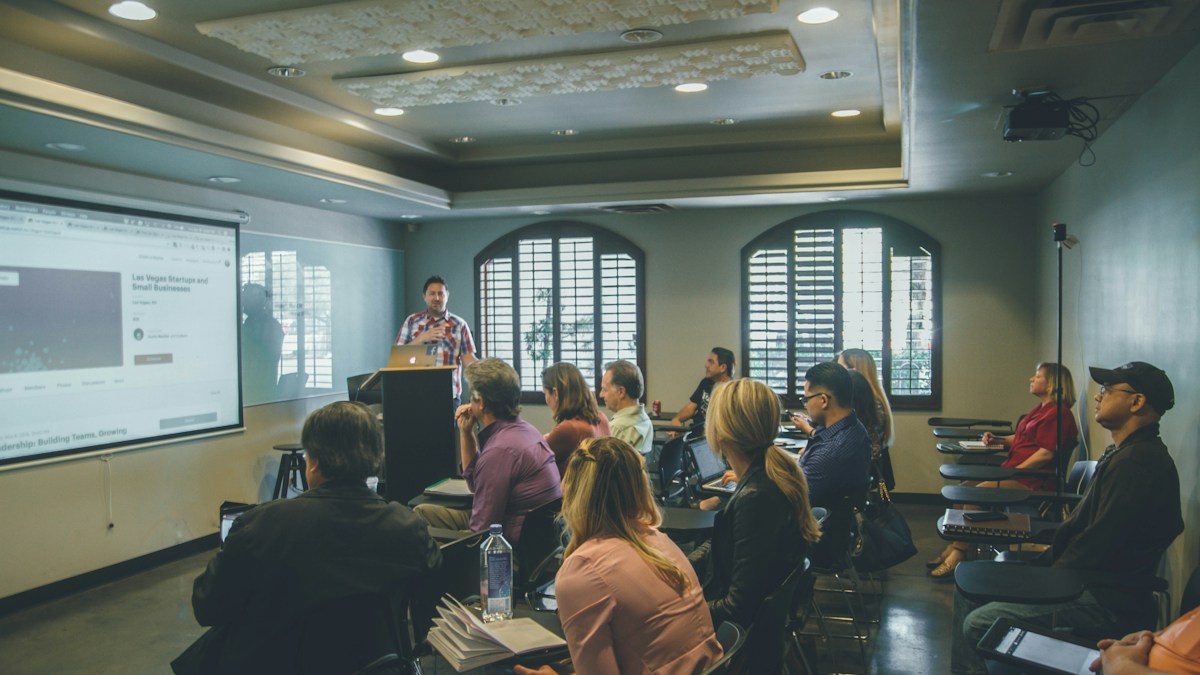
Technology in education only succeeds when faculty genuinely love using it. By pairing our academic LMS with the AI Course Creator and AI-Assisted Assessment & Automated Grading, we eliminate the repetitive busywork that drains educator energy:
- 5-Minute Lesson Plan & Interactive Unit Generation: A biology teacher or economics lecturer uploads a syllabus chapter or PDF reading and generates differentiated lesson modules, interactive flashcards, visual summaries, and bilingual vocabulary lists in minutes.
- Differentiated Difficulty Tiers: Automatically generate three variations of a reading passage or practice worksheet—foundational support, grade-level standard, and advanced enrichment—so every learner in a mixed-ability classroom is appropriately challenged.
- AI-Assisted Rubric Grading with Teacher Sign-Off: For short-answer questions, essays, and coding assignments, the platform pre-evaluates submissions against the instructor’s rubric, highlights strengths and grammar/logic gaps, and drafts constructive feedback. The teacher reviews, adjusts if needed, and publishes grades in a fraction of the usual time.
6. Connecting the Digital Campus: SIS, Parent Portals & Online Fee Systems

As we explained in our popular article Why Do Schools Need an SIS as Well as an LMS?, your Student Information System (SIS) is the administrative system of record (admissions, enrollment, transcripts, timetables, and tuition), while your LMS is the pedagogical heart where daily teaching and learning happen.
Through our LMS Development Services and IT Cloud Integration team, Talent Developments connects your academic ecosystem end-to-end:
- OneRoster & SIS Synchronization: Native two-way sync with PowerSchool, Infinite Campus, Ellucian Banner, Anthology, RenWeb/FACTS, and custom regional Ministry systems—automatically updating class rosters, teacher timetables, and final transcript grades.
- Integrated Tuition & Fee Workflows: Pair your campus portal with an Online School Fee Payment System supporting regional payment gateways across Oman (Thawani/OmanNet), Saudi Arabia (Mada/STC Pay), UAE, Qatar, and India (UPI/NetBanking), with automated fee reminders inside the parent app.
- Campus-Wide Cyber Security & Student Data Privacy: Built to comply with FERPA, COPPA, GDPR, and GCC Ministry of Education student data protection laws, reinforced by our enterprise Cyber Security Services.
7. K-12 vs. Higher Education (K-20) Feature Matrix
| Campus Capability | K-12 LMS & School LMS | University LMS & K-20 LMS |
|---|---|---|
| Primary Learner UX | Visual, gamified, age-tiered (Primary / Middle / High) | Academic, research-oriented, mobile & lecture-hall ready |
| Socratic AI Online Tutor | Homework helper with parent/teacher guardrails | 24/7 course TA grounded in professor’s syllabus & textbooks |
| Curriculum Authoring | AI Course Creator for lesson plans & worksheets | Outcome-Based Education (OBE) syllabus & module builder |
| Family & Stakeholder Access | Real-time bilingual Parent Portal & mobile notifications | Student advisor, dean, and career-services dashboards |
| Assessment & Integrity | Interactive quizzes, voice/drawing uploads, auto-grading | Proctored exams, LTI 1.3 Turnitin plagiarism & rubric engines |
| Regional & Global Reach | LMS in Oman, UAE, Saudi Arabia, Qatar & Global | Multi-campus university networks & executive education portals |
8. Frequently Asked Questions (FAQ)
What is the difference between a K-12 LMS and a K-20 LMS?
A K-12 LMS (or School LMS) is designed specifically for primary, middle, and high schools—featuring age-adapted student interfaces, gamified homework tracking, and real-time parent portals. A K-20 LMS extends that foundation through undergraduate, postgraduate, and vocational higher education (Learning Management Systems for Universities), adding Outcome-Based Education (OBE) accreditation mapping, research cohort spaces, and career-readiness skill passports.
How does the Talent Developments AI Online Tutor prevent students from just copying homework answers?
Our AI Online Tutor uses a Socratic pedagogical guardrail. When a student asks for help with a math problem, science concept, or essay prompt, the tutor never writes the final submission for them. Instead, it asks step-by-step guiding questions, explains the underlying concept using the teacher’s approved curriculum, and logs the interaction so the teacher can see how the student arrived at their solution.
Can the School & University LMS handle both Arabic and English curricula?
Yes. Talent Developments is widely recognized among the Best LMS Platforms for Schools & Training Institutes in the GCC because it offers native right-to-left (RTL) Arabic and left-to-right (LTR) English interfaces. Students, teachers, and parents can switch languages effortlessly on web and mobile.
Does the platform integrate with our existing Student Information System (SIS) and online fee payment tools?
Yes. Through standard OneRoster, LTI 1.3, and REST APIs supported by our IT Cloud Integration team, our LMS syncs seamlessly with leading SIS platforms and integrates with your Online School Fee Payment System, Zoom, Microsoft Teams, and Google Workspace for Education.
How quickly can a school or university launch the Talent Developments platform?
A single-campus school or college can launch on our Cloud LMS in 2 to 3 weeks, including teacher training and roster imports. Multi-campus university systems and custom ministry deployments typically go live within 4 to 6 weeks.
🌟 Build a Smarter, More Human Digital Campus with Talent Developments
Empower your teachers, engage parents, and give every student a 24/7 Socratic mentor with Talent Developments—the unified platform for K-12 LMS, School LMS, K-20 LMS, University LMS, and AI Online Tutoring.
👉 Book Your Live Campus Demo | Compare Academic Plans & Pricing | Contact Our Academic Team
✉️ Direct Academic Desk: info@talentdevelopments.com